
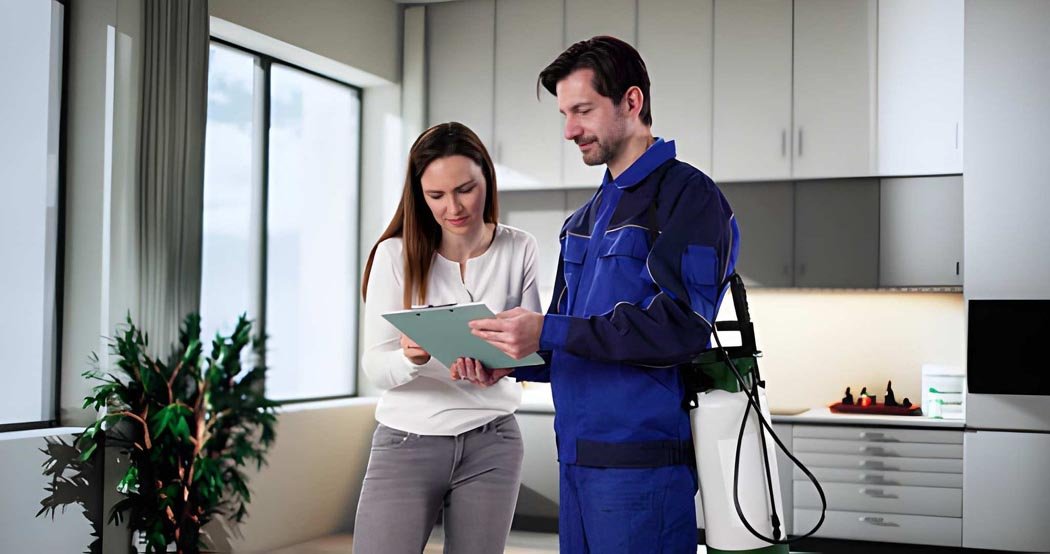
Understanding why your home and your business need completely different pest management strategies — and why choosing the right one matters far more than most people realise.
Whether you own a villa in Jumeirah, manage a restaurant in Business Bay, or run a warehouse in Al Quoz — pest control is not a one-size-fits-all service. The approach, the chemicals used, the treatment frequency, and the regulatory requirements differ significantly between homes and businesses.
Most people searching for “pest control near me in Dubai” assume the service is essentially the same regardless of where it is applied. That assumption can cost you — through failed inspections, recurring infestations, serious health risks, and in some cases, your business license.
This guide lays out exactly what separates residential pest management from commercial pest control, what each one involves, and how to make the right decision for your property — whether it is a family home in the suburbs of Dubai or a food facility operating under HACCP standards.
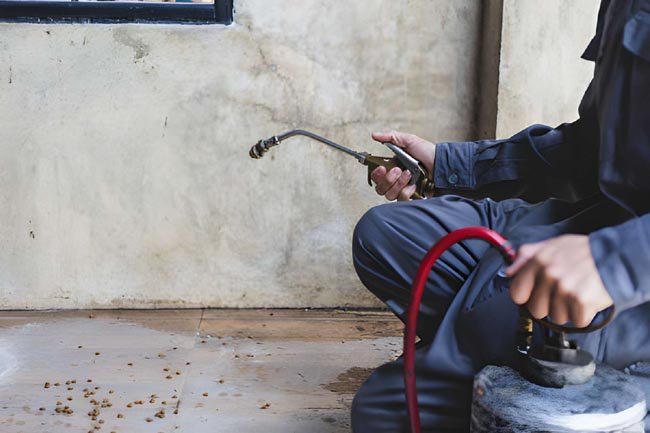
1. Why the Distinction Matters in Dubai
Dubai’s climate — hot, persistently humid, and constantly expanding through construction — creates an almost ideal environment for pest activity throughout the entire year. Cockroaches, rodents, bed bugs, termites, and flies thrive in this kind of heat. Unlike colder climates where pests become dormant in winter, properties across the UAE face active infestations in every single month.
Dubai Municipality enforces strict pest control guidelines — particularly for businesses that handle food, operate in the hospitality sector, or serve in healthcare settings. Using the wrong type of pest control service — for example, hiring a residential-focused provider to treat a commercial kitchen — can leave your business non-compliant with Dubai Municipality standards, DTCM inspection requirements, and food safety certifications.
Understanding the difference is not just about getting better results. It is about making sure the service you receive is appropriate, legal, and built for the specific demands of your environment.
2. What Residential Pest Control Involves
Residential pest control is designed specifically for living spaces — villas, apartments, townhouses, and residential compounds across Dubai and the broader UAE. The focus is on family safety, minimal chemical exposure, and protecting the spaces where people eat, sleep, and live their daily lives.
Primary goals of home pest control
When a family contacts PureairDXB for their home in Mirdif, Arabian Ranches, or The Springs, the technician’s priorities centre on these principles:
- Using child-safe and pet-friendly treatment options wherever possible
- Minimising disruption to the household’s daily routine
- Treating bedrooms, kitchens, bathrooms, and all common entry points
- Offering flexible scheduling with single-visit or periodic treatment plans
- Providing homeowners with practical preventive advice after each visit
The scale is smaller, the sensitivity is higher — children, pets, elderly family members, and allergy sufferers all factor into product selection — and the property type is generally consistent enough that a well-trained technician can follow a thorough, home-specific protocol with minimal variation.
Residential pest control in Dubai is typically charged per treatment visit or as an annual maintenance package, giving homeowners predictability without requiring a complex commercial contract.
3. What Commercial Pest Control Involves
Commercial pest control is an entirely different discipline. It applies to restaurants, hotels, hospitals, warehouses, supermarkets, offices, schools, food manufacturing plants, labour accommodation facilities, and any other business premises operating in the UAE. The stakes here are significantly higher — a single pest sighting in a restaurant or hotel can trigger an immediate closure notice, damage a brand’s reputation irreparably, and generate substantial financial loss within hours.
What commercial pest management actually covers
For commercial clients — whether a five-star hotel on Sheikh Zayed Road or a logistics facility in Dubai Industrial City — the service scope changes fundamentally:
Scale and access challenges
- Large floor areas — sometimes thousands of square metres
- Multiple pest entry and harborage points
- High-traffic zones complicating treatment timing
- Sensitive equipment and food-contact surfaces to protect
- Staff operating around the clock in many venues
Regulatory paperwork required
- Dubai Municipality pest control certificates
- HACCP-aligned integrated pest management programmes
- Scheduled treatment logs ready for inspection
- Pest trapping records and catch data reports
- Written corrective action plans following pest activity
Commercial pest control providers also need to coordinate treatments around business hours, health and safety protocols, and in regulated industries, food safety standards including FSSC 22000 or ISO 22000 — requirements that a purely residential-focused provider is simply not equipped or authorised to handle.
4. Key Differences — Residential vs Commercial
| Factor | Residential | Commercial |
|---|---|---|
| Property type | Homes, villas, apartments | F&B, hotels, offices, warehouses |
| Treatment frequency | Quarterly or on-demand | Monthly, bi-monthly, ongoing contracts |
| Regulatory compliance | General household safety | Dubai Municipality, DTCM, HACCP, ISO |
| Documentation required | Basic treatment record | Full IPM logs, trend analysis, corrective actions |
| Chemical selection | Family and pet safe formulations | Food-safe, surface-specific, industry-approved |
| Access hours | Flexible daytime scheduling | Off-hours, early morning, or overnight required |
| Inspection scope | Interior and perimeter check | Full facility audit — drainage, roof, loading bays |
| Risk level | Moderate — hygiene and comfort | High — legal liability, brand reputation, operations |
| Emergency response | Standard scheduling | Same-day or within-hours response essential |
| Contract structure | Per-visit or annual package | Annual contract with fixed monthly service visits |
5. Common Pests by Property Type in Dubai
Pests most commonly found in Dubai homes and villas
Bed bugs — bedrooms and upholstered furniture
House ants — food trails in kitchen areas
Subterranean termites — wooden structures and flooring
Silverfish — stored items, books, damp storage rooms
Drain flies — bathroom and kitchen drains
Pests most commonly found in Dubai commercial and business properties
Norway rats and roof rats — warehouses and kitchens
American cockroaches — drains and back-of-house areas
Stored product insects — flour beetles, grain weevils
House flies — restaurants, food courts, retail spaces
Mosquitoes — hotel gardens, outdoor F&B, pool areas
Pharaoh ants — hospitals, pharmacies, clinical settings
6. Regulatory Compliance and Dubai Standards
This is arguably the most critical differentiator between residential and commercial pest control in the UAE — and an area where many business owners underestimate their exposure until a Dubai Municipality inspector arrives unannounced.
Dubai Municipality pest control requirements
Dubai Municipality mandates that all food-handling businesses — restaurants, cafeterias, catering companies, central kitchens, supermarkets, and food manufacturing facilities — maintain active, documented pest control contracts with a DM-approved pest control provider. Treatment certificates must be displayed on the premises, and service records must be readily available for inspection at any point during operating hours.
HACCP and integrated pest management
For businesses operating under internationally recognised food safety standards — HACCP, FSSC 22000, BRC, or ISO 22000 — pest management must be embedded as a documented critical control point. This means pest control is no longer just reactive spraying when something is spotted. It becomes a structured, risk-assessed, preventive programme with written records at every stage.
Commercial pest control providers must supply pest activity trend data, corrective action documentation, and evidence of structural recommendations such as gap sealing, drain management, and exclusion measures — not just chemical treatment records.
Residential pest control carries none of these obligations. A home treatment does not require a corrective action plan or a pest monitoring log. Which is exactly why businesses should never attempt to use a residential-grade service provider for a commercial premises — it simply does not meet the standard required.
DTCM and hospitality sector requirements
Hotels, serviced apartments, and holiday homes registered with Dubai Tourism (DTCM) are subject to periodic inspections that specifically check pest control compliance. A live pest sighting or absence of valid pest control documentation during a DTCM inspection can directly affect a property’s star rating or operating license. PureairDXB provides dedicated hospitality pest management programmes designed to meet DTCM inspection criteria.
7. Treatment Methods — How They Differ in Practice
Residential treatment approach
Home treatments prioritise personal safety, minimal odour, and the least possible disruption to the family’s routine. PureairDXB residential technicians use a tailored combination of:
- Gel bait applications for cockroaches — no spraying, no lingering fumes
- Non-repellent liquid treatments for perimeter protection and entry-point sealing
- Heat treatment for complete bed bug eradication in bedrooms and soft furnishings
- Rodent bait stations positioned in concealed, child-safe locations
- Termite baiting systems and soil treatments for villa foundations and wooden structures
- Residual dust applications for wall cavities and hard-to-reach harborage areas
Commercial treatment approach
Commercial treatments require considerably more strategic planning before a single product is applied. The technician must account for the nature of the business, the products stored or prepared on-site, operational hours, access restrictions, and the site’s pest pressure history.
- Drain foaming and flushing to eliminate cockroach harborage in drainage infrastructure
- Electric fly killer (EFK) installation, servicing, and catch tray analysis
- Tamper-resistant rodent bait stations across facility perimeters and internal risk zones
- Residual surface spraying in non-food-contact areas and structural voids
- Pheromone and sticky traps for stored product insect monitoring and trend tracking
- Container fumigation for severely infested goods or incoming shipments
- Structural exclusion works — door brush seals, mesh installation, gap filling, pipe sealing
8. How to Choose the Right Pest Control Service
Before hiring any pest control provider in Dubai, the questions you ask should reflect the specific demands of your property. Here is what to look for in each scenario:
Questions to ask
- Are the products safe for children and pets?
- Do they offer a service guarantee or re-treatment if needed?
- Are technicians trained and certified in the UAE?
- Can they handle specific problems like termites or bed bugs?
- Do they provide inspection findings and before/after reports?
Questions to ask
- Is the company approved by Dubai Municipality?
- Do they provide full IPM documentation and trend reports?
- Can they work outside business hours without disruption?
- Is emergency same-day response available?
- Is the contract aligned with HACCP or your specific food safety standard?
Pricing also reflects this structural difference. Residential pest control in Dubai is typically charged per treatment type or as an annual home maintenance package. Commercial contracts are structured as annual or bi-annual agreements with fixed monthly service visits — giving business owners cost predictability, continuous compliance coverage, and a named account manager who knows the site.
9. Why Businesses and Homeowners Trust PureairDXB
PureairDXB is a Dubai-based pest control company with dedicated service teams for both residential and commercial environments across the UAE. The company does not operate a one-size approach — the technician treating your restaurant understands food safety documentation, hygiene zones, and DM audit requirements. The technician treating your family home knows how to work safely around children, pets, and sensitive indoor environments.
For homeowners, PureairDXB offers straightforward, transparent treatment packages with guaranteed results. Bookings are flexible, technicians arrive on time, and every visit ends with a written summary of what was found, what was treated, and what you can do to reduce risk between visits.
For commercial clients — from independent restaurants in Karama to five-star hotel chains in Downtown Dubai — PureairDXB delivers Dubai Municipality compliant pest control contracts, full integrated pest management documentation, same-day emergency response, and a commercial account management team that handles inspection preparation, compliance queries, and scheduling coordination on your behalf.
Whether the issue is a cockroach problem in a Jumeirah villa kitchen, a rodent concern in an Al Quoz logistics warehouse, bed bugs discovered in a hotel room in Palm Jumeirah, or stored grain pests in a Sharjah food facility — the approach, the product selection, and the reporting must match the environment precisely. That is the real difference between a pest control service and a genuine pest control solution.
10. Frequently Asked Questions
What is the main difference between residential and commercial pest control?
Residential pest control focuses on family safety in home environments using low-toxicity products, flexible scheduling, and straightforward treatment protocols. Commercial pest control covers business premises with a much larger scope — including Dubai Municipality documentation, integrated pest management (IPM) programmes, HACCP compliance, off-hours treatment scheduling, and emergency response coverage.
Do restaurants in Dubai need a special pest control certificate?
Yes. Dubai Municipality requires all food-handling businesses to maintain an active pest control contract with a DM-approved provider. A valid certificate must be displayed on the premises and treatment logs must be available during any inspection. Failure to comply can result in fines, temporary closure, or license suspension.
Is residential pest control safe for children and pets in Dubai?
When carried out by trained professionals using the right formulations — gel baits, non-repellent sprays, and low-toxicity dusts — residential pest control is safe for family homes. PureairDXB uses child-safe and pet-friendly products for all home treatments, and technicians advise on any required preparation or re-entry times before leaving the property.
Can I use a residential pest control company for my office or restaurant in Dubai?
Technically possible, but not advisable. A provider without Dubai Municipality commercial approval cannot issue the certificates required for food business inspections. They also lack the equipment, documentation systems, and regulatory knowledge needed for HACCP-aligned services. For business premises, always use a DM-approved commercial pest control company.
How often should commercial premises in Dubai be treated for pests?
This depends on the business type and risk level. Restaurants and food facilities typically require monthly treatments at minimum. Hotels may require bi-monthly or monthly visits. Offices and retail premises can often be managed on a quarterly schedule. A proper site assessment by PureairDXB will determine the right frequency for your specific premises and risk profile.
What pests are most common in Dubai’s commercial kitchens?
American cockroaches in drainage systems, house flies, fruit flies in bar areas, Norway rats in external refuse zones, and Pharaoh ants in pantry and storage areas are among the most frequently reported pests in Dubai’s F&B sector. Each requires a targeted control method, which is why a generic one-treatment-fits-all approach does not work in a commercial kitchen environment.