
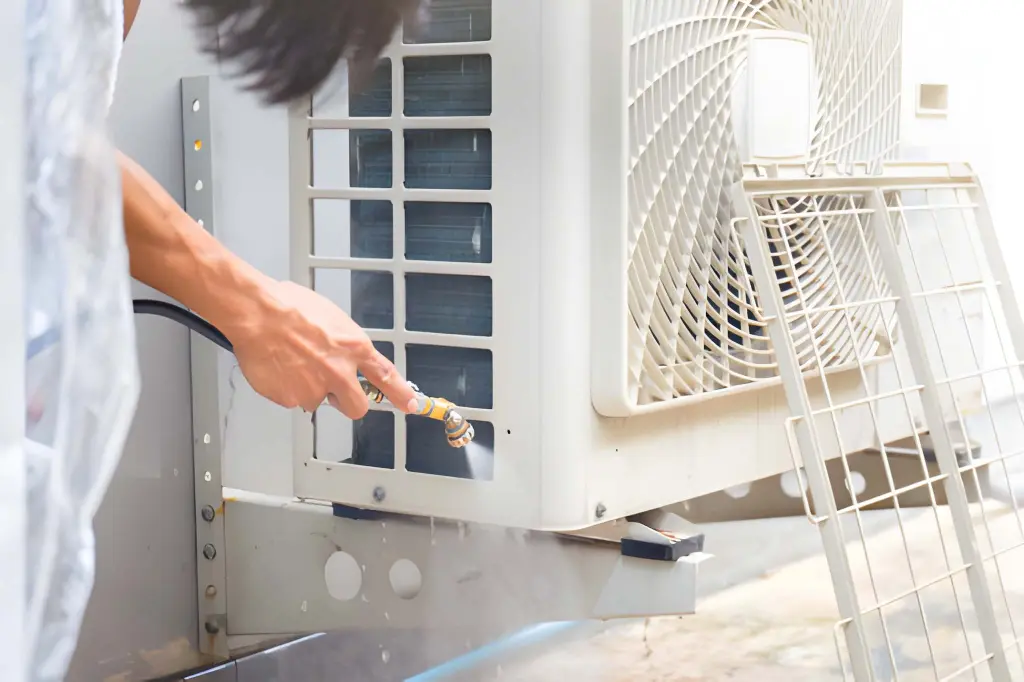
Every property owner in Dubai asks this at some point. “How often do I actually need to clean my AC?”
And the honest answer is: it’s not one-size-fits-all. It depends on where you live, what type of building, how much you use it, and what you mean by “cleaning.” But I’m going to walk you through the actual schedule based on what I see in the field, not what generic maintenance guides suggest.
The biggest mistake I see is people thinking there’s one maintenance schedule for all of Dubai. There isn’t. A villa in Arabian Ranches has completely different cleaning needs than an apartment in Dubai Marina. An office with ten people uses AC differently than a residential unit. A restaurant kitchen creates a maintenance requirement that’s almost in a different category altogether.
So let me break this down practically.
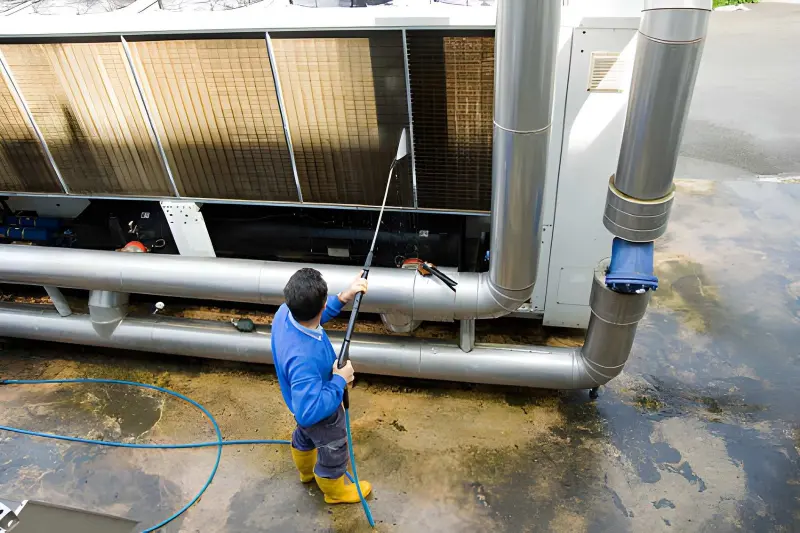
The Starting Point: What Counts as “Cleaning”?
Before we talk frequency, we need to agree on what we’re actually talking about.
When homeowners say “clean my AC,” they usually mean one of three things, and they’re each on different schedules:
Filter Changes
This is what people think of most often. You’re replacing the disposable filter that catches dust before air enters your system. This is routine maintenance. Every property owner should be doing this.
Coil and Basic Internal Cleaning
This goes deeper. Your evaporator coil accumulates dust over time. Professional cleaning removes that buildup. It’s not just filter replacement—it’s accessing internal components.
Full System Deep Cleaning
This includes coils, ducts, drain pans, and sometimes ductwork. It’s comprehensive. It addresses everything inside the system that can accumulate contamination.
Each has its own frequency. And understanding the difference is what prevents people from either under-maintaining their systems or paying for services they don’t yet need.
The Filter Schedule: Monthly Check, 2–3 Month Changes
Let’s start with the easiest and most important piece: filters.
In Dubai, your AC filter should be checked monthly and changed every 2–3 months. Not every 6 months. Not annually. Every 2–3 months.
Why? The dust load is higher here. It’s not a failing of your filter—it’s the environment. Desert dust, construction debris, coastal salt air, and sandstorm residue all find their way into your home. Your filter catches it. But it gets clogged faster than in temperate climates.
If you have a high-quality filter (MERV 11 or better), you might stretch to 3 months. If you have a basic filter, 2 months is more realistic.
Here’s how to know if your filter needs changing before the 2–3 month mark:
Hold it up to a light source. If light barely passes through, it’s time to change. If dust is visibly packed into the fibers, don’t wait. If your AC seems to be running longer to cool your space, the filter is probably clogged.
Many people put a reminder on their phone for every 3 months. That’s a good habit. But checking it monthly takes 30 seconds and prevents the situation where you’re running a completely clogged filter without realizing it.
Cost: AED 30–100 per filter depending on quality. Budget AED 150–400 annually for filter replacements.
Coil Cleaning: The Real Maintenance Schedule
Now we move beyond filters to the coil—where the actual cooling happens.
This is where property type and location really start to matter.
Apartment in Dubai Marina or Downtown Dubai
These areas experience high dust exposure and coastal air if they’re waterfront. Plus, continuous AC operation in summer.
Cleaning Frequency: Every 8–12 months
Why: Coils in these locations accumulate dust and mold faster. The combination of desert dust, construction sites, salt air, and continuous cooling creates conditions for rapid contamination.
Most Marina residents I work with schedule coil cleaning in April, just before the brutal summer months. That way, when their AC is running 12+ hours daily, they’re starting with a clean coil.
Apartment in JVC, Jumeirah Lake Towers, or Similar Inland Locations
Lower dust load than Marina. Less salt air exposure. Still in an urban environment with construction activity nearby.
Cleaning Frequency: Every 12–15 months
Why: Slower contamination rate. These areas are established, less construction-heavy than Downtown or Business Bay. Coils still need cleaning, but you have more flexibility in scheduling.
Villa in Arabian Ranches, The Meadows, or Suburban Areas
Established, quieter neighborhoods. Less construction. More open space.
Cleaning Frequency: Every 12–18 months
Why: Lower external dust sources. Your coil doesn’t face the same bombardment of particles. However, if you have a garden or the property sits in an area with occasional construction, you might lean toward the 12-month side.
Office or Commercial Space
This depends heavily on occupancy and what the space is used for.
Light office (under 20 people, standard office work): Every 6–12 months
Busy office (50+ people, constant activity, visitor traffic): Every 6 months
Why: Higher occupancy means more skin cells, dust, and particulates circulating. More people also means the AC runs more constantly.
Restaurant or Commercial Kitchen: Every 3–6 months
Why: Cooking generates oil vapor and fine particles that coat coils rapidly. Grease buildup accelerates mold growth. These spaces need aggressive maintenance.
Hotel or Hospitality: Every 3–6 months
Why: Continuous guest turnover, high occupancy, people from different environments tracking in dust. Plus, guest expectations for air quality are high.
Retail or Shopping Space: Every 6–9 months
Why: High foot traffic, dust from outside being tracked in constantly, variable occupancy levels. Maintenance needs fall between residential and hospitality.
Deep Cleaning: The Comprehensive Approach
This is where you address everything—coils, ducts, drain pans, and sometimes ductwork sanitization.
Deep cleaning is different from coil cleaning alone. It’s more thorough, more involved, and more expensive. But it’s also the service that makes the biggest difference when your system is seriously contaminated.
When to Schedule Deep Cleaning:
You should get a deep clean:
- When you first notice a smell from your AC – This is the primary symptom that something inside your system has grown mold or bacteria. Don’t wait.
- If your AC has never been professionally cleaned and you’ve owned it for 2+ years – You likely have accumulated contamination that filter changes alone won’t address.
- If you’re moving into a new property with an existing AC system – You don’t know the maintenance history. Starting with a deep clean ensures you’re beginning with a clean system.
- Every 18–24 months for apartment dwellers in high-dust areas – This is preventative maintenance for properties that experience rapid contamination.
- Every 2–3 years for villa owners in lower-dust areas – Still maintaining the system proactively.
- When energy bills start climbing despite using AC the same amount – Contamination is making your system work harder.
Deep cleaning usually costs more than routine coil cleaning—typically double—but it addresses all the internal contamination at once rather than just managing one component.
The Seasonal Timing Strategy
This is something I tell every client: timing matters.
Best time to schedule any AC cleaning in Dubai: April or early May.
Why? Because you’re approaching the brutal summer season. You want your system clean when it’s going to work hardest. Cooling efficiency improves when you start with a clean system. And you’re likely to need less frequent intervention during the off-season.
Some people schedule coil cleaning in September or October, thinking they’re ahead of the curve. But by April, contamination has happened again. You’re essentially wasting the benefit of the cleaning by not doing it closer to peak usage.
Secondary maintenance window: November or December, after you’ve run your AC constantly through summer and early fall. This cleans up whatever accumulated during the heaviest usage months. If you’re on a 6-month maintenance cycle (offices, commercial), this second cleaning helps you start the year fresh.
But the primary window is always April/May.
What Your Maintenance Calendar Should Actually Look Like
Let me give you a practical example. Here’s what I recommend to most residential clients:
Monthly: Check your filter. If it looks clogged, change it.
Every 2–3 months: Change filter regardless (preventative).
April or May: Schedule professional coil cleaning. If you suspect contamination (smell, weak airflow), get a deep clean instead.
If you notice smell during the year: Don’t wait for your scheduled maintenance. Call for immediate service. Smell indicates biological growth that shouldn’t be circulating through your home.
Every 12–18 months: Reassess. Has your AC stayed clean? Cooling well? Energy bills stable? If yes, you’re on the right track. If contamination symptoms are returning faster, move to a more frequent cleaning schedule.
For comparison, here’s what a commercial property in a busy area should do:
Every 1–2 weeks: Visual filter check.
Every 6 weeks: Filter change.
Every 6 months: Professional coil cleaning and system inspection.
Annually: Deep clean with ductwork assessment.
As needed: Any time smell, weak airflow, or energy bill spikes occur.
The False Economy of Skipping Maintenance
I understand the temptation. Professional cleaning costs money. You might think: “I’ll just change filters more often and skip the professional coil cleaning.”
I’ve seen this approach play out hundreds of times. It doesn’t work.
Filters catch large particles. They don’t reach the coil. So dust still accumulates on the coil. Eventually, you’ve got a contaminated system anyway—you’ve just delayed the inevitable while your AC struggled under the burden.
Worse, the delayed maintenance often means the contamination is more severe by the time you finally act. Mold has spread. Bacterial colonies are established. The cleaning becomes more difficult and more expensive.
By contrast, regular maintenance is genuinely economical:
- Energy savings: A clean system uses 15–20% less energy. In a year, that’s AED 500–1,200 for an average residential property.
- Equipment longevity: Regular cleaning prevents premature failures. AC units last 12–15 years with maintenance, 8–10 years without it.
- Avoided emergency calls: Breakdowns in summer are expensive and stressful. Prevention is always cheaper.
- Health benefits: A clean system doesn’t circulate mold or bacteria, affecting your family’s respiratory health.
The math is straightforward: spending AED 300–500 annually on professional cleaning saves you money on energy and equipment lifespan while protecting your health.
Properties with Special Circumstances
Some situations require adjusted schedules:
Near active construction sites: Add 3–6 months to your cleaning frequency. Construction dust accelerates contamination significantly.
Coastal properties (Marina, Jumeirah, near the beach): Salt air corrodes components and accelerates dust accumulation. Lean toward the more frequent side of your schedule.
Properties with pet hair or shedding: If you have dogs or cats, add 1–2 months to your filter-change schedule. Pet hair clogs filters faster.
Properties with people who have allergies or asthma: More frequent filter changes (every 2 months instead of 3) and potentially more frequent coil cleaning. Clean air quality directly impacts health.
Newly built properties (first 2–3 years): Construction dust settles for longer than you’d expect. Be more aggressive with filter changes and coil cleaning during this period.
How to Monitor Your System Between Cleanings
You don’t need a technician to know if something’s wrong:
Weak or uneven airflow – Your AC should push air forcefully from the vents. If it feels weak, the coil or ducts are likely clogged.
Smell – Any musty, stale, or slightly rotten odor means bacterial or mold growth. This isn’t something to manage—it’s something to address immediately.
Dust visible around vents – If you see gray or brown dust accumulating on surfaces near AC vents, your system is internally contaminated.
Longer cooling times – Your space takes noticeably longer to cool to your set temperature. This indicates your AC is working harder, usually due to coil clogging.
Rising energy bills – Your bill climbs even though you’re using AC the same amount. Contamination makes your system less efficient.
Uneven temperature – Some rooms cool quickly, others stay warm. This can indicate duct blockage or uneven coil contamination.
Any of these warrant a professional inspection, not necessarily an immediate full cleaning, but at least a look to diagnose what’s happening.
Frequently Asked Questions
Q: I’ve never had my AC professionally cleaned. Where do I start?
A: Start with a professional inspection. They’ll tell you if your system needs a deep clean, coil cleaning, or is still in relatively good shape. Most systems that have never been cleaned benefit from a deep clean first, then move to a regular maintenance schedule.
Q: Is monthly filter checking really necessary?
A: Not mandatory, but it helps. You catch clogged filters early instead of running a completely blocked system without knowing. It’s 30 seconds once a month.
Q: Can I clean my coil myself?
A: You can attempt gentle cleaning with a coil cleaning spray from a hardware store. But professional cleaning is more effective. Coil fins are delicate—improper cleaning can damage them.
Q: Should I clean my AC before or after summer?
A: Before summer (April/May) is far better. You’re preparing your system for peak usage. Cleaning in October means you’ve let contamination build during the busiest months.
Q: Does cleaning frequency differ for split AC versus central systems?
A: The principle is the same, but central systems affect your whole property, so contamination has wider impact. You might prioritize central system cleaning slightly more than split units.
Q: My energy bill is high. Could it be my AC?
A: Absolutely. A clogged AC system forces your AC to work harder, consuming more energy. Professional cleaning often reduces energy bills noticeably.
Q: If I’m renting, who’s responsible for AC cleaning?
A: Check your lease. Typically, landlords are responsible for major maintenance. But filter changes might be the tenant’s responsibility. Clarify before assuming.
Q: Is there a best time of year to buy AC cleaning services cheaper?
A: Generally, off-season (November–March) is slightly cheaper than April–May when everyone schedules before summer. But the best time is when you need it, not when it’s cheapest.
Q: Can I get sick from a dirty AC?
A: Yes, in some cases. Mold spores and bacteria can exacerbate allergies, asthma, and respiratory infections. People with compromised immune systems are more vulnerable. Regular cleaning prevents this.