
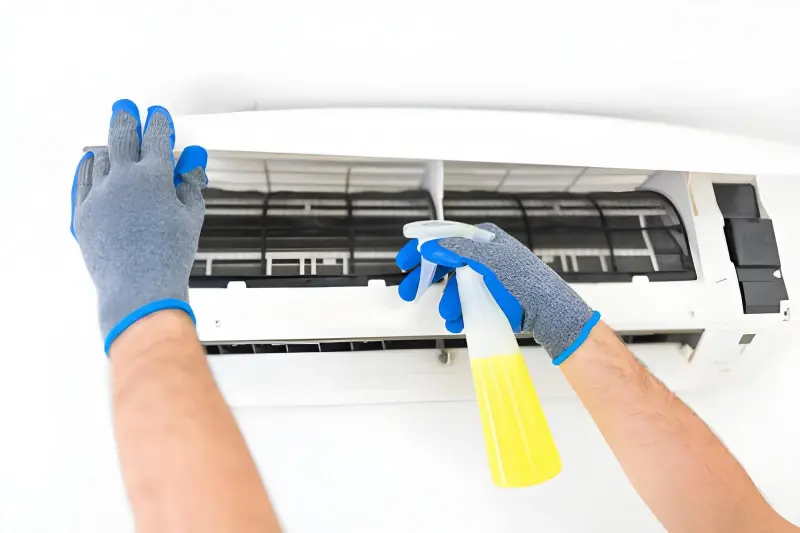
I get this question almost weekly: “Do I really need a deep cleaning, or can I just change the filter more often?”
The answer matters because it affects your indoor air quality, your AC’s efficiency, and how much you’re actually spending on maintenance. And I’m going to give you a straight answer, not a sales pitch.
The short version: both matter, but they serve completely different purposes. Changing your filter and deep cleaning your AC are not alternatives to each other—they’re complementary. But understanding the difference helps you know what you actually need, when you need it, and why.
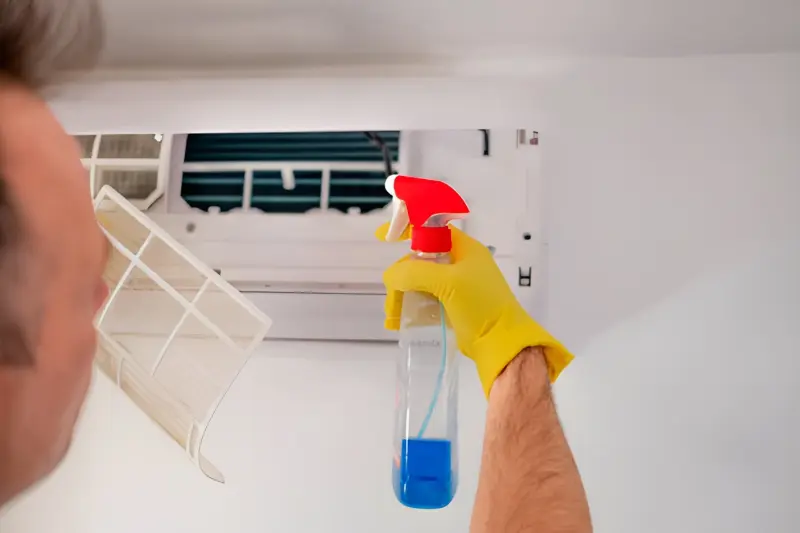
What a Filter Change Actually Does (And Doesn’t)
Let’s start with what most people understand: the filter.
Your AC filter catches particles before they enter your system. Dust, pollen, pet hair, construction debris—these get trapped in the filter’s fibers. This is essential. A clogged filter:
- Forces your AC to work harder, consuming more energy
- Restricts airflow, reducing cooling efficiency
- Allows dust to bypass the filter and enter the system anyway
- Increases pressure on internal components
In Dubai, you should change your AC filter every 2–3 months, not annually. Our dust load is simply higher. Desert dust, construction site particles, and sandstorm residue mean filters clog faster than in other climates.
Here’s what’s crucial to understand: a filter only catches particles before they enter the system.
Once air passes the filter, it travels over your evaporator coil, through your ductwork, and back into your home. Anything that settles inside the coil, ducts, or other internal components is invisible to you. The filter can’t remove it. Changing the filter won’t clean it out.
This is where people get confused. They change the filter regularly, but they still smell odors, still see dust around vents, and still experience poor air quality. They think the filter has failed. Actually, the problem is deeper inside the system.
What Deep Cleaning Actually Does
AC deep cleaning is a comprehensive service targeting internal contamination that filters can’t reach.
When we perform AC deep cleaning, we’re addressing three main zones:
The Evaporator Coil
This is where cooling happens. Cold refrigerant flows through thin metal fins, and warm air from your home passes over them. The air cools, but moisture condenses on the coil—just like water droplets form on a cold glass on a hot day.
Under normal conditions, this condensation drains away through a drain pan and pipe. But when dust accumulates on the coil’s fins, it blocks drainage. Water pools. In Dubai’s humidity, mold grows within days. Bacteria follow.
Deep cleaning involves:
- Accessing the coil (requires opening the indoor unit)
- Using specialized tools to remove dust, mold, and bacterial buildup
- Restoring proper drainage
- Sometimes applying antimicrobial treatment
Once clean, the coil functions properly again—cooling effectively and draining moisture, which naturally inhibits mold regrowth.
The Ductwork
Ducts are the hidden network running through your walls and ceilings. Dust settles inside them. Mold grows in damp sections. Bacteria colonies develop. None of this is visible from outside. But every time your AC runs, contaminated air circulates through your home.
Deep cleaning involves:
- Accessing the duct network with specialized equipment
- Dislodging and extracting accumulated dust and debris
- Removing mold and bacterial buildup
- Sometimes applying sanitization
The Drain Pan and System Components
The drain pan collects condensation from the coil. If it’s clogged or contaminated, water backs up, humidity increases indoors, and mold accelerates. Deep cleaning includes flushing and sanitizing these areas.
The Dubai Factor: Why Deep Cleaning Happens Faster Here
In cooler climates, AC deep cleaning might be a one-time-every-three-years service. In Dubai, it’s much more frequent—usually annually, sometimes every 6–12 months depending on your environment.
Here’s why:
Year-Round AC Operation
Your AC runs almost constantly from May through October, sometimes longer. That’s 6–8 months of continuous moisture generation inside the system. Coils and ducts never get a break to dry out.
Extreme Humidity
Dubai’s summer humidity can exceed 80%, especially near the coast. Your AC is fighting to remove moisture from the air constantly. This aggressive dehumidification means more water condenses on coils, increasing mold risk exponentially.
High Dust Load
Desert dust, construction debris, sandstorm residue, and coastal salt air accumulate in your home faster than in other climates. Your filter catches some, but particles still enter the system. They settle on coils and in ducts.
Continuous Dust Sources
In areas like Downtown Dubai, Business Bay, Dubai Marina, and JVC, there’s ongoing construction. New buildings, renovations, and infrastructure projects generate dust continuously. Even with your windows closed and filter running, fine particles find their way in.
Combine these factors, and your AC’s internal contamination cycle is fast. What might take 3 years in a temperate climate happens in 12–18 months here. In heavily contaminated environments, 6–12 months.
When Do You Need Each Service?
Here’s the practical breakdown:
Filter Changes – Every 2–3 Months (Year-Round)
This is routine maintenance. It’s non-negotiable. A clogged filter is like trying to breathe through a pillow—your AC has to strain, and it’s less effective.
Check your filter monthly. If it’s visibly gray or brown with dust, change it. Don’t wait.
Deep Cleaning – Annually or Every 12–18 Months (Depending on Your Environment)
Schedule deep cleaning based on these factors:
- Apartments in Dubai Marina, Downtown, or areas with high dust/construction exposure: Every 6–12 months
- Villas in lower-dust areas (some areas of Arabian Ranches, Meadows): Every 12–18 months
- Commercial spaces with high occupancy (offices, hotels, restaurants): Every 6–12 months
- Properties that haven’t been cleaned since installation: Deep clean immediately
Additional Cleaning Triggers:
- You notice AC smell – indicates mold/bacterial growth; deep clean immediately
- Visible dust around vents – suggests internal contamination
- Weak or uneven airflow – coil blockage likely
- Your allergies worsen when AC is on – indoor air quality is compromised
Cost Perspective: Why Deep Cleaning Is an Investment, Not an Expense
I understand the hesitation. Deep cleaning costs more than changing a filter. But here’s the reality:
Energy Savings
A coil clogged with dust makes your AC work harder. After deep cleaning, many customers report 10–20% reduction in their energy bills. If your monthly AC bill is AED 300–500, that’s real savings.
Equipment Longevity
AC units that run with clogged coils and ducts experience accelerated wear. Compressors work harder. Components fail sooner. A deep cleaning every 12 months extends your AC’s lifespan by years. Replacement costs AED 2,000–5,000+ per unit. Prevention is far cheaper.
Health Benefits
Mold spores and bacteria circulating through your home affect respiratory health, allergies, and sleep quality. That has immeasurable value.
Avoiding Emergency Breakdowns
A severely clogged system can fail during peak summer heat. Emergency repair calls in August cost significantly more than scheduled maintenance.
When you calculate the ROI—energy savings plus equipment longevity plus health benefits—annual deep cleaning in Dubai is economically sound.
How Deep Cleaning Differs by AC System Type
Not all systems require the same cleaning approach:
Split AC Units (most common in Dubai apartments)
The indoor wall unit has an accessible coil, and the short duct behind it can be cleaned. Deep cleaning focuses on the coil and ductwork.
Cassette AC Units (ceiling-mounted, common in modern apartments and offices)
Multiple ceiling-mounted units distribute air to different zones. Each unit has a coil and ductwork. Deep cleaning requires accessing and cleaning each cassette unit and the duct network systematically.
Ducted Central Systems (larger villas, commercial buildings)
A central unit feeds ducts throughout the property. The ductwork is extensive. Deep cleaning is more complex but also more impactful—cleaning one system improves air quality in all rooms simultaneously.
VRF/VRV Systems (high-end residences and commercial)
These variable refrigerant flow systems are more complex but follow the same principle: internal contamination requires professional cleaning. The process is specialized but addresses the same issues.
Window AC Units (less common in modern Dubai)
Limited ductwork, but significant coil contamination risk. Coil cleaning is the priority.
How Deep Cleaning Differs by Property Type
The contamination risk varies:
Apartments
Sealed environment with limited external dust entry. However, high humidity in summer increases mold risk. Dense building construction means ducts are shorter but potentially more contaminated if shared ventilation exists.
Villas
Larger ductwork networks and more AC units. Typically have more dust entry points (gardens, garages, multiple external walls). Contamination spreads faster.
Offices
High occupancy means more dust, skin cells, and potential for bacteria. Air quality standards are often higher (people expect cleaner air at work). Deep cleaning every 6–12 months is standard.
Hotels and Hospitality
Continuous guest turnover, higher occupancy density, and guests with varying cleanliness standards. Deep cleaning every 3–6 months is common.
Restaurants and Commercial Kitchens
Cooking generates oil mist, smoke, and fine particles that accumulate in ducts rapidly. Deep cleaning every 3–6 months is essential for compliance and air quality.
The Synergy: Filters + Deep Cleaning = Complete AC Health
Think of it this way:
- Filter changes are like brushing your teeth daily—essential routine maintenance
- Deep cleaning is like a professional dental cleaning—necessary periodically to remove buildup that brushing can’t address
You don’t choose one over the other. You do both on appropriate schedules.
A customer who changes their filter every 2 months but never deep cleans is like someone brushing their teeth twice daily but never seeing a dentist. You’re preventing surface contamination but missing deeper issues.
Conversely, deep cleaning your system once and then ignoring filter changes is wasteful. You’re removing contamination only to allow it to accumulate again.
The right approach: regular filter maintenance + annual deep cleaning = optimal AC performance, efficiency, and indoor air quality.
Expert Insight: What We See in the Field
As HVAC cleaning specialists, here’s what we consistently observe in Dubai properties:
Most residential AC systems go 3–5 years without deep cleaning. By that point, evaporator coils are clogged with a mixture of dust, mold, and bacterial buildup that’s visually striking. The smell is often severe. Airflow is noticeably weak.
Apartments that receive annual deep cleaning maintain consistently clean systems. Coils stay clear. Ducts remain uncontaminated. Owners report no smell, better cooling, and lower energy bills.
Commercial properties that deep clean every 6 months maintain superior indoor air quality and experience virtually no equipment failures due to contamination.
The pattern is clear: the frequency of deep cleaning directly correlates with system health, performance, and longevity.
Frequently Asked Questions
Q: If I change my filter monthly instead of every 3 months, do I still need deep cleaning?
A: Yes. More frequent filter changes help, but they don’t prevent internal contamination. A clogged coil or moldy ductwork won’t be cleaned by replacing the filter. Deep cleaning addresses what filters can’t reach.
Q: How long does an AC deep cleaning take?
A: For a typical apartment with 1–2 split units, 2–3 hours. For larger villas or commercial properties with central systems, 4–6 hours or more depending on system complexity and contamination level.
Q: Will deep cleaning disrupt my home?
A: Minimal disruption. Your AC is offline during cleaning, which takes a few hours. The process doesn’t require major structural work—the technician accesses the system through existing access points.
Q: Can I deep clean my AC myself?
A: Not effectively. Deep cleaning requires specialized equipment (access tools, extraction equipment, sanitizing tools) and technical knowledge of AC systems. DIY attempts risk damaging coils or leaving contamination behind.
Q: What’s included in professional AC deep cleaning?
A: Coil cleaning, duct cleaning, drain pan sanitization, sometimes antimicrobial treatment, and airflow verification. A reputable provider will explain exactly what they’re cleaning and why.
Q: How often should I deep clean if I have allergies?
A: Every 6–12 months, or more frequently if you notice allergy symptoms when AC is on. Clean systems reduce airborne allergens significantly.
Q: Does deep cleaning solve AC smell completely?
A: Almost always, yes—if the smell is caused by internal contamination (mold, bacteria, dust). After cleaning, smell typically doesn’t return for 6–12 months with proper maintenance. If smell returns immediately, it may indicate a drainage problem worth investigating.
Q: Is the antimicrobial spray used in deep cleaning safe?
A: Yes, when applied by professionals using approved, non-toxic products. The spray inhibits mold and bacterial regrowth without creating health risks for occupants. Confirm with your provider that they use safe, certified products.