
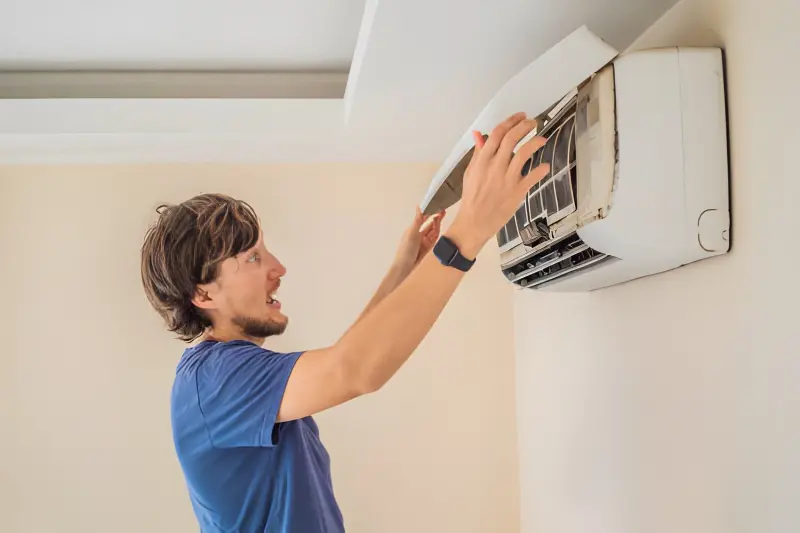
You’re enjoying the cool air from your AC on a hot Dubai afternoon, and then you notice it—a musty, stale, or even slightly rotten smell coming from the vents. You check the filter, maybe spray some air freshener into the duct, but the smell comes back. You’re not alone. This is one of the most common complaints I hear from homeowners and business owners across Dubai Marina, Downtown, Jumeirah, and beyond.
The frustrating part is that your AC is cooling perfectly fine. The problem isn’t mechanical—it’s hygiene. And once you understand what’s actually happening inside your AC system, the solution becomes obvious.
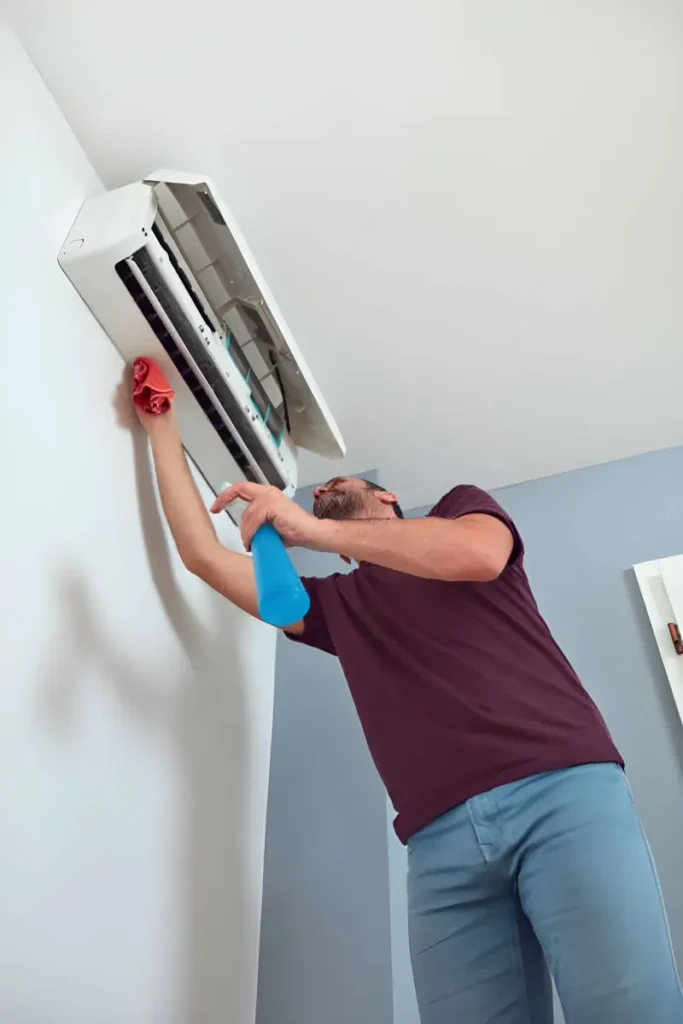
What’s Really Causing That Smell?
Let me be direct: that smell isn’t just dust or a dirty filter. It’s biological.
Your AC system is actively pulling air from inside your home, passing it through filters and coils, and circulating it back out. In Dubai’s climate, this is happening almost year-round. During those long months of high heat and humidity (May through September, sometimes longer), your AC coils and ducts become a perfect breeding ground for three main culprits:
Mold and Mildew
This is the primary cause. Inside your AC system, water condenses on the cold evaporator coils. Normally, this water drains away. But when dust, pollen, and construction debris accumulate on those coils, they block proper drainage. Water pools. Moisture sits. And in a humid Dubai environment, mold grows within days.
I’ve opened AC ducts in apartments across Dubai Marina and found dark patches of mold coating the interior surfaces. You can’t see it from outside, but it’s there—and it’s producing spores that circulate every time your AC runs.
Bacterial Buildup
Bacteria thrive in damp, dark environments. Your AC ducts provide exactly that. When dust, hair, skin cells, and moisture combine inside a sealed duct, bacteria colonies form. They don’t just smell bad—they can worsen allergies and respiratory issues, especially for children, elderly family members, or anyone with asthma.
Trapped Dust and Debris
Dubai has a unique environmental challenge. Desert dust, construction site particles, sandstorm residue, and coastal salt air all find their way into your home’s ventilation. Even with filters in place, fine particles settle deep in the ductwork where they decompose and create stale, musty odors.
Why Dubai’s Climate Makes This Worse
This is the part most people miss. AC smell isn’t a universal problem—it’s a Dubai problem, specifically because of our environmental conditions.
In cooler climates, AC systems run intermittently. Here, your AC runs nearly constantly from May through October, sometimes even in April and November. That’s 6–8 months of non-stop moisture generation inside your ducts and coils.
Add our humidity levels—which can exceed 80% in summer, especially near the coast—and you’ve created the ideal environment for mold growth. The evaporator coils on your AC are designed to cool air, but they’re also pulling moisture out of your home. If that moisture can’t drain efficiently due to dust blockage, it accumulates.
Then there’s the dust itself. Construction dust in areas like Downtown Dubai, Business Bay, and Dubai Marina settles on every surface—including inside your AC system. Coastal buildings near the marina face additional salt air exposure, which accelerates dust accumulation.
Most homeowners run their AC 8–12 hours daily, sometimes more. That’s continuous circulation through a system that hasn’t been deep cleaned since installation.
How to Know Your AC Ducts Need Cleaning
Bad smell is the obvious sign, but there are others:
- Visible dust around vents – Fine dust accumulating on surfaces near AC outlets
- Weak or uneven airflow – Blockage in ducts reducing circulation
- Allergies or respiratory irritation – Increased sneezing, coughing, or breathing difficulty when AC is on
- Stale air feeling – Air feels recycled and “thick” rather than fresh
- Discoloration inside vents – Gray or brown dust visible on vent grilles
- Humidity feeling higher indoors – Coil blockage reducing dehumidification efficiency
If your AC is running, cooling properly, but you notice any of these, the issue is internal contamination—not a mechanical fault.
The Root Cause: Where Ducts Fit In
Your AC system has multiple contamination zones. People often think the filter handles everything, but that’s a misconception.
The filter catches large particles—dust, hair, pet dander—before air enters the system. This is essential, but it’s only the first line of defense.
Air then passes over the evaporator coil, where moisture condenses and cooling happens. This is where mold loves to grow, especially under dust accumulation. If the coil is clogged with dust, water doesn’t drain properly, moisture sits, and bacterial and mold colonies develop.
Finally, cooled air travels through the ductwork—the hidden network of metal tubes running through your walls, ceilings, and under your floors. Ducts are difficult to clean with standard tools. They’re dark, sealed environments where dust settles and moisture can accumulate. If mold or bacteria develop here, every time your AC runs, it spreads contamination throughout your entire home.
This is why a clean filter alone doesn’t eliminate smell. You can replace your filter monthly, but if your ducts and coils are contaminated, the smell persists.
How AC Duct Cleaning Solves the Problem
Professional duct cleaning removes accumulated dust, mold, and bacterial buildup from inside the ductwork itself. This is different from simply changing a filter or wiping visible surfaces.
Here’s what proper duct cleaning includes:
Physical Removal of Contamination
Specialized tools are inserted into ducts to dislodge and extract dust, mold, and debris that has settled on interior surfaces. For split AC units common in Dubai apartments, this means cleaning the ducts connected to the indoor unit and air return paths. For ducted or central systems in larger villas or commercial spaces, it means accessing the entire duct network.
Coil Cleaning
While accessing ducts, the evaporator coil is also cleaned thoroughly, removing dust and mold that may be blocking water drainage. A clean coil means proper moisture removal and reduced mold growth.
Sanitization
After physical removal, antimicrobial treatment may be applied to inhibit mold and bacterial regrowth, particularly important in Dubai’s humid climate.
System Testing
After cleaning, airflow is tested to ensure ducts are clear and your AC is operating at full efficiency.
The result? Smell elimination, improved indoor air quality, and better AC efficiency—sometimes reducing energy consumption by 15–20%.
Different AC Types, Different Cleaning Needs
Not all AC systems are created equal, and cleaning approaches vary:
Split AC Units (most common in Dubai apartments)
The indoor wall unit pulls air through filters and coils, then distributes cooled air through a duct to your room. The duct behind the wall, though short, can accumulate dust and mold. Cleaning focuses on the ductwork and the coil on the indoor unit.
Cassette AC Units (found in some modern apartments and offices)
These are ceiling-mounted units with ducts distributing air to multiple zones. The ductwork is more extensive, making it more prone to contamination. Cleaning requires accessing the duct network systematically.
Ducted Central AC Systems (common in larger villas and commercial buildings)
Large properties with a central unit feeding ducts throughout the building face the highest risk of duct contamination simply due to duct length and complexity. These systems benefit most from professional duct cleaning because contamination can affect multiple rooms and zones.
Window AC Units (less common in modern Dubai, but still present)
These have minimal ductwork but significant coil contamination risk. Coil cleaning is the priority.
Prevention: Keeping Your AC Clean Longer
Once your ducts are clean, here’s how to maintain them:
Change Filters Regularly
In Dubai, change your AC filter every 2–3 months, not annually. The dust load is higher than in other climates. A clogged filter forces your AC to work harder and increases coil blockage risk.
Run Your AC Smartly
Continuous operation in summer is normal, but try to maintain stable indoor humidity. If humidity stays above 60% inside, mold risk increases. Use your AC’s dehumidification settings if available.
Dust Your Home Regularly
Dust entering your home eventually enters your AC. Regular vacuuming, damp dusting, and air filtration (HEPA filters, air purifiers) reduce the dust load your AC must process.
Schedule Professional Cleaning Annually
In Dubai’s environment, annual duct and coil cleaning isn’t excessive—it’s practical maintenance. Many property managers schedule this before summer kicks in (April/May) to ensure clean systems during peak usage months.
Expert Insight: Why This Matters
HVAC hygiene specialists consistently find that homeowners underestimate how fast systems contaminate in Dubai. A clean AC unit can develop noticeable mold within 3–4 months during high-humidity season if it isn’t properly maintained. The smell you’re noticing isn’t a sign of early-stage contamination—it’s usually an indicator that biological growth is already established.
The good news: once cleaned professionally and maintained properly, most residential and commercial AC systems stay smell-free for 6–12 months in Dubai, depending on your specific environment (proximity to construction, coastal exposure, etc.).
Frequently Asked Questions
Q: Does duct cleaning really improve indoor air quality?
A: Yes, significantly. Mold spores, dust particles, and bacteria circulating through contaminated ducts directly enter your breathing air. Removing this contamination reduces allergens and airborne particles. People with asthma or allergies often notice immediate improvement.
Q: How often should AC ducts be cleaned in Dubai?
A: For residential properties, annually or every 12–18 months is standard in Dubai’s environment. For commercial spaces with higher occupancy or areas near construction, cleaning every 6–12 months is advisable. If you notice smell or visible dust, don’t wait—clean immediately.
Q: Can I clean AC ducts myself?
A: Not effectively. Ducts are sealed systems designed for professional access. Surface cleaning won’t remove embedded contamination deep inside. Professional tools and expertise ensure complete removal of mold and bacteria that at-home methods simply can’t reach.
Q: Does cleaning ducts reduce my energy bill?
A: Often, yes. Dust-clogged ducts force your AC to work harder to move air, increasing energy consumption. After professional cleaning, airflow improves and your AC operates more efficiently. You may see 10–20% reduction in energy costs, depending on how contaminated the system was.
Q: Will the smell come back after cleaning?
A: Not immediately if you maintain your system. Regular filter changes, seasonal cleaning, and proper humidity control keep ducts clean. If smell returns within months of professional cleaning, it usually indicates a new problem (coil blockage, drainage issue) worth investigating.
Q: Is duct cleaning safe for my family?
A: Yes, professional duct cleaning is safe. During the process, your AC may be temporarily offline. Afterward, your system circulates cleaner air. If antimicrobial treatment is used, ensure it’s approved and safe for occupied spaces—any reputable provider will use non-toxic, certified products.